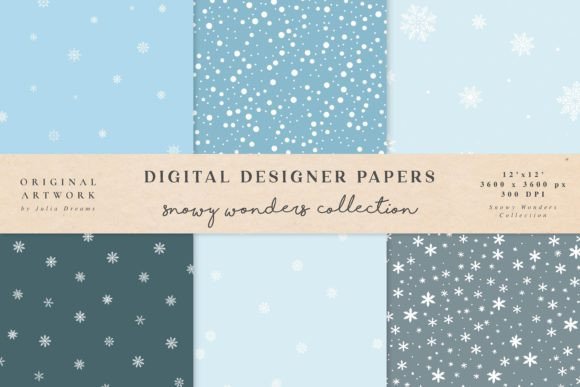
Snowflake Overlays Seamless Patterns: A Designer's Real-World Review
When I first opened the folder for Snowflake Overlays Seamless Patterns, I wasn't just looking at a collection of pretty images; I was immediately visualizing how these designs would translate into physical objects. As someone who spends hours testing files on different fabrics, my initial reaction to this set from the Snowy Wonders Collection was one of cautious optimism. The mood is undeniably crisp and wintry, evoking that specific feeling of a fresh snowfall that we all love during the holiday season. But in the world of machine embroidery design, a beautiful image does not always guarantee a clean stitch-out.
The file set includes six distinct digital papers featuring seamless patterns. What stands out immediately is the versatility of the layout. These aren't just isolated motifs; they are continuous textures that promise to cover large areas without obvious repeating seams. For an Etsy seller or a small shop owner, this is a massive advantage. Imagine creating a boutique product line where every item—from a tea towel to a pillow cover—shares a cohesive visual identity. The ability to scale these patterns up or down while maintaining their integrity is exactly what separates a hobbyist project from a professional finished product.
From Digital File to Finished Product: A Practical Scenario
Let's talk about a real-life scenario. I recently had a client request custom embroidered tote bags for a local holiday market. They wanted something festive but not cliché. Usually, standard snowflakes can look a bit generic when stitched onto canvas, often appearing too blocky or losing detail in the fill stitches. However, I decided to test the Snowflake Overlays Seamless Patterns as a background texture for these bags.
I imported the vector files (.ai and .svg) into my digitizing software to convert them into a machine embroidery design suitable for a 6x10 hoop. The seamless nature of the pattern allowed me to create a full-field fill that wrapped around the bag's surface. The result was stunning. Instead of a single, heavy snowflake in the center, the entire fabric shimmered with a delicate, intricate lattice work. When the customer saw the final sample, they didn't just see a logo; they saw a high-end textile piece. This is the kind of elevation that drives sales for craft business owners who want to charge premium prices for handmade products.
Similarly, I tested these graphics on a thick cotton sweatshirt for a nursery gift. The pattern worked beautifully as a border or a subtle background behind a personalized name. It added depth without overwhelming the text. The contrast between the white thread and the dark heather grey fabric made the design pop, proving that Snowflake Overlays Seamless Patterns has the potential to elevate even simple apparel decorations into something special.
Navigating Fabric Texture and Stitch Density
However, no design is perfect for every situation, and honesty is crucial for any designer reviewing a new asset. While the raster files (.jpg and .png) are great for printing mockups or creating digital previews, the true test lies in how the design handles dense stitch areas. Because these are seamless overlays, they inherently require significant coverage. If you attempt to use this on a thin, stretchy fabric like jersey knit without proper stabilization, you risk puckering. The density of the snowflake details could pull the fabric out of shape if you don't use a cut-away stabilizer or a temporary spray adhesive.
I also found that on textured fabrics like terry cloth or heavy wool, some of the finer details in the pattern might get lost. The thread needs a smooth surface to lay flat and show off its sheen. If you are planning to use this for embroidered patches, be aware that the fine lines might require a higher thread count or a slightly larger hoop size to ensure clarity. Small hoop sizes can sometimes struggle to capture the nuance of a complex seamless pattern, leading to a loss of definition in the corners of the design.
Color Choices and Visual Appeal
The success of Snowflake Overlays Seamless Patterns heavily depends on your thread color selection. Since the original graphics are likely monochromatic or light-based, using white or silver threads on dark backgrounds creates a classic, elegant look. However, if you choose a busy or multi-colored thread palette, the seamless nature of the pattern might become visually chaotic. The design works best when it acts as a supporting element rather than the sole focal point.
For commercial embroidery projects, consistency is key. Using this pattern ensures that every item in a batch looks identical, which builds trust with buyers. Whether you are making holiday gifts, wedding favors, or boutique branding items, the uniformity provided by a seamless vector file is invaluable. It prevents the "patchy" look that often happens when stitching individual elements side-by-side. This level of professionalism is what keeps customers coming back to your shop.
Technical Notes for the Savvy Maker
Before you start stitching, there are a few practical steps every designer should take. First, always test the design on scrap fabric. This is non-negotiable. Check how the stitch density interacts with your specific material. If the design feels too heavy, consider adjusting the settings in your digitizing software to reduce the fill density or switch from a satin stitch to a running stitch for certain details.
Review the stitch direction carefully. Seamless patterns can sometimes create tension issues if the stitch angles aren't optimized. Make sure the design flows naturally across the fabric grain. Also, inspect the small details. If you plan to sell these as part of a personalized gift, ensure that any tiny elements remain legible after washing. Frequent washing can wear down fine threads, so durability is a factor to consider for items like aprons or kitchen towels.
If you are a digital product seller, remember that the inclusion of both vector (.eps, .ai, .svg) and raster formats gives you immense flexibility. You can use the vector files for direct-to-garment mockups or to create printable assets for your customers. Just double-check the licensing terms before selling finished items or offering the digital files themselves. Some collections allow personal use only, while others permit commercial production.
Final Thoughts on Design Assets
In conclusion, Snowflake Overlays Seamless Patterns is a strong addition to any embroidery designer's library. It offers a modern twist on traditional winter themes and provides the scalability needed for large-scale projects. From custom apparel to decorative home goods, this set delivers a polished, professional look that resonates with buyers. By understanding its strengths and limitations regarding fabric type and stitch density, you can transform a simple digital graphic into a cherished handmade product. Whether you are a hobbyist maker or a seasoned entrepreneur, taking the time to test and refine this design will pay off in the quality of your final output.
Remember, the difference between a good project and a great one often comes down to preparation. Test your stabilizer, check your thread colors, and let the versatility of this pattern guide your creative process. With the right approach, these seamless patterns can become the signature element of your next holiday collection.